Monster DIY: Mix Beats
- 4.5
- Rating
- 5.00M
- Installs
- Free
- Price
 Analysis by App-foxy
I went into Monster DIY: Mix Beats expecting a small, silly music game, and that is exactly where its appeal begins. It does not ask me to take a fictional world seriously or master a demanding instrument. Instead, it puts a funny monster at the center, lets me shape its appearance, and turns the result into a short visual-and-audio play session. The concept is easy to understand within moments, which makes it a comfortable choice when I want something light rather than another complicated mobile game.
Developed by HIGAME GLOBAL, this free game sits in the music category but also has the relaxed, toy-like feel of a casual creative app. Its store summary focuses on making a monster, watching it dance, and mixing beats, and that combination describes the experience better than calling it a conventional rhythm challenge. I found the strongest reason to return was not competition; it was the small satisfaction of changing the character and seeing how the presentation responds.
The game is available for players aged Teen, and it reached mobile stores on December 19, 2024. It has built a 4.6 average from around 31 thousand ratings and passed 5 million installs, so it is clearly attracting more than a tiny niche. Those figures suggest a broad audience for its simple idea, although popularity alone does not make it suitable for every music-game fan.
You May Also Like

 Blood Strike: 2.5 Anniversary
Blood Strike’s Loadouts Turn Every Drop Into a Tactical Gamble
A close look at Blood Strike’s custom loadouts: how fast access to signature weapons reshapes its battle royale rhythm, rewards preparation, and narrows the gap between fights.

 Pandora - Music & Podcasts
Pandora’s Music Is Easy to Start, but Harder to Recover
Pandora’s strength is its low-effort path from a seed to a station. Its weak spot is how much confidence it asks you to place in connection, setup, and quiet recovery.

 8 Ball Pool
 Is Built on Rivalries, Rematches, and Routine
A close look at the rivalries, rematches, shared routines, and unanswered safety questions that turn a quick pool match into a persistent mobile community.

 Samsung Music
’s Quiet Strength Is Playing What You Already Own
Its reach comes less from spectacle than from dependable access to a personal library. That simplicity is both the app’s strongest retention engine and its ceiling.

 AccuWeather: Weather Radar
AccuWeather Review: A Quick, Clear Forecast for Everyday Decisions
For everyday plans, the best forecast is the one you can understand quickly. AccuWeather makes rain timing, radar, and local conditions easy to act on, with a few trade-offs.

 Hill Climb Racing
Why Hill Climb Racing Still Turns Crashes Into One More Run
A tiny car, a bumpy hill and one more upgrade: Hill Climb Racing keeps resurfacing because its simple chaos makes every near-miss feel personal.
More From Our News Desk



How the visual idea sets the mood
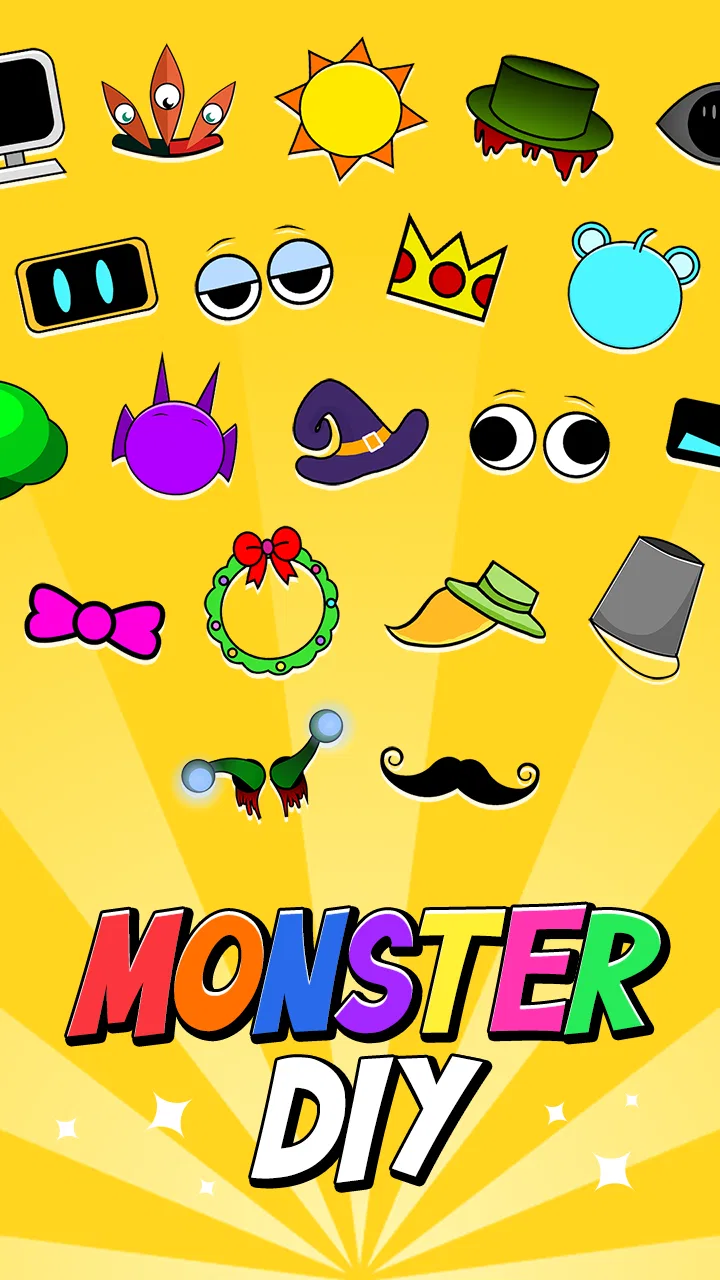
The first impression is deliberately playful. The monster is the main event, and the DIY angle gives the opening interaction a personal touch: I am not merely selecting a song and watching a preset performer. I am helping define the character that will occupy the scene. That makes the game feel closer to arranging a funny little performance than completing a standard level.
What works here is the clear relationship between the visual subject and the musical premise. The monster is not an unrelated mascot placed on top of a rhythm interface. Its dancing gives the beats a visible personality, while the beat-making gives the creature a reason to move. Even without a deep story, that connection creates a coherent mood.
The art direction appears designed for quick recognition. A monster-centered screen, expressive movement, and a bright, humorous tone make the game readable at a glance. I never felt that I needed a long explanation before understanding what the screen wanted me to do. For a casual title, that is important: the visual language should invite experimentation instead of making the player decode menus first.
There is also a useful trade-off in this simplicity. Because the focus stays on the creature and its performance, the experience feels approachable, but it does not offer the same sense of discovery as a large music game with a broad fictional universe. Players who want narrative progression, detailed environments, or a strong cast of characters may find the setting too narrow. I would recommend it more readily to someone who enjoys character customization and playful animation than to someone looking for an expansive world.
A practical way to use the game is as a short reset between tasks. If I have a few minutes before leaving the house or want something undemanding after a long day, the monster gives me an immediate visual anchor. There is no need to remember a complicated plot or rebuild a strategy from a previous session. The appeal comes from the instant loop of changing the little performer, starting the musical moment, and seeing the result.
Why the monster design matters more than it first appears
The DIY concept does more than decorate the title. It gives the player a reason to look closely at the character rather than treating the screen as a passive music visualizer. My first useful tip is to make small changes instead of trying to create a perfect monster immediately. A deliberately odd combination can be more entertaining to watch because the humor comes from the contrast between the design and the dance.
That approach also reveals the game’s likely strength for younger players and families who are comfortable with its Teen rating. It offers a low-pressure form of expression: the player can experiment with a visual identity without needing drawing skills or musical training. At the same time, the age classification means I would not assume it is intended for very young children without checking the device and store settings first.
The setting remains compact, and that is both a benefit and a limitation. A compact presentation keeps the rhythm visible and prevents the mood from becoming cluttered. However, anyone hoping for a detailed stage-building tool or a full music-production environment should look elsewhere. This is a playful monster performance, not a replacement for a serious beat workstation.
Where the sound and dancing meet
The sound design is central because the game’s entire identity depends on the relationship between beats and movement. I found the concept most successful when I treated the music as something to feel with the animation rather than something to analyze like a professional track. The dancing gives the audio a body, and the audio gives the monster a pulse.
That makes the experience different from a typical rhythm game built around accuracy. In many music titles, the main question is whether I can tap at the correct moment. Here, the more interesting question is what kind of performance I have created and whether the monster’s movement matches the mood I wanted. The game therefore feels closer to a beat toy than to a strict score attack.
One useful habit is to listen before making too many visual decisions. I prefer to let the beat establish the tone, then choose a monster design that feels intentionally compatible or intentionally ridiculous. This creates a clearer result than changing everything at random. It is a small workflow, but it turns a few taps into a more deliberate creative session.
The game’s pacing benefits from not demanding a long commitment. Short musical interactions suit the humorous character and keep the dancing from becoming exhausting. If the same presentation continued without variation for a long stretch, its novelty would probably weaken, so I see the concise format as part of the design rather than a missing feature. It is made for repeated bursts of amusement, not for an evening-long concert.
Still, players should understand the difference between mixing beats in a casual game and producing music. The title’s musical appeal comes from combining the game’s available elements and watching the outcome. It is not the right choice for someone who wants to import audio, arrange tracks with detailed controls, or learn formal rhythm technique. A dedicated music-making app will be a better option for those goals, while a competitive rhythm game will suit players who want precision, rankings, and increasingly difficult timing tests.
Another practical tip is to play with the sound at a comfortable level and use headphones only when they genuinely improve the experience. The visual performance is important enough that the game does not depend entirely on loud audio. That makes it easier to use in a shared room, although I would still avoid treating it as a silent game if the beat is the part I want to appreciate.
A casual rhythm loop rather than a demanding test
The mechanical fit is strongest when the player wants immediate feedback. The apparent loop of making a monster, starting the musical presentation, and watching it dance is easy to grasp. I did not need to approach it with the mindset I use for a traditional rhythm title. That lowers the barrier to entry and makes it suitable for people who enjoy music-themed games but do not want pressure.
There is a subtle advantage in connecting customization to performance. When the character is something I have arranged myself, even a simple dance feels more personal. The result is not necessarily deeper in a technical sense, but it is more engaging than watching an anonymous animation. This is one of the game’s non-obvious strengths: ownership can make a small amount of content feel more memorable.
The same connection creates the main risk. If a player needs constant mechanical challenge, the customization-and-dance loop may feel limited after the initial curiosity fades. I would especially hesitate to recommend it as a primary game for someone who normally plays demanding rhythm titles. It works better as a companion experience, a quick distraction, or a creative toy that can be opened without preparation.
For an everyday scenario, imagine sharing a phone with a friend during a short wait. One person can create an intentionally strange monster, while the other judges whether the dance fits the beat. That kind of informal exchange is where the game makes more sense than playing alone for hours. It gives people a visual result to react to, and the humor comes from the choices made before the performance begins.
Another good use is to give it to someone who says they do not play music games because they are bad at timing. The game’s central attraction does not appear to depend entirely on perfect taps or advanced knowledge. The player can enjoy the creature, the sound, and the outcome without treating every moment as an exam. Conversely, someone who wants a game that actively trains timing may find the relaxed structure too forgiving.
On the technical side, the current version is 0.1.5 and the minimum operating-system requirement is Android 7.1. That makes it accessible to a wide range of older Android devices, at least from the stated system requirement. I would still judge the actual comfort of play by the phone’s screen, speaker quality, and general performance, because a music game loses some charm when animations stutter or sound is unpleasant. The low entry requirement helps, but it does not guarantee identical results on every handset.
Since the game is free, it is easy to try without turning the decision into a purchase commitment. That is useful here because the right question is not whether it replaces a full rhythm game; it does not. The better question is whether a player enjoys a funny character, quick beat-based interactions, and visual experimentation. If the answer is yes, the free entry makes exploring that loop straightforward.
How it compares with familiar alternatives
Compared with a standard rhythm game, Monster DIY: Mix Beats is less focused on accuracy and more focused on presentation. A traditional title usually gives me a track, a timing pattern, and a clear performance target. This game instead makes the monster part of the reward. I am not only trying to succeed; I am shaping what I want to watch.
Compared with a music-production app, it is much easier to approach but far less useful for serious composition. There is value in that limitation. A production tool can feel like work when I only want a playful minute with sound, while this game keeps the process compact and visual. The trade-off is that the player should not expect professional control or a finished song-making workflow.
Compared with a character-customization game, the beat element gives the choices an immediate payoff. The monster is not just being dressed or displayed; it is placed into a performance. That makes the customization feel more active. However, players who want long-term collecting, deep progression, or a large social system may prefer a broader character game.
My clearest recommendation is therefore situational. Choose this one if you want a free, humorous music experience that can be understood quickly and enjoyed in short sessions. Skip it if your priority is competitive scoring, advanced audio editing, a substantial story, or a large world to explore. Those are not flaws in the narrow sense; they are boundaries that define what this game is trying to be.
It is also worth deciding whether the visual joke has enough staying power for you. The first monster and first dance can be charming because the idea is fresh. Continued enjoyment depends on whether experimenting with different designs and beat combinations remains fun. I found that the game works best when I create a small theme for each session instead of repeatedly asking it to provide a completely new experience on its own.
My verdict on the atmosphere and staying power
The atmosphere is the game’s most convincing achievement. The funny monster, the dance-focused presentation, and the beat-centered interaction all point in the same direction. Nothing about the concept asks me to become a serious musician or a heroic adventurer. It wants to be playful, immediate, and a little silly, and the art, sound, and pacing support that goal.
I especially like that the game gives a visual reason to care about the audio. The beat is not just background decoration, and the monster is not just a static avatar. Their connection supplies the mood. Even when the mechanics remain simple, the presentation can make a short session feel like I have staged a tiny performance.
The limitations are clear enough that I would not call it an all-purpose music game. Its compact loop may not satisfy players who need constant progression, difficult timing challenges, or deep control over sound. The Teen content rating should also be respected when deciding who uses it. But for the right audience, the simplicity is a feature: I can open it, make a funny choice, hear the result, and leave without a major time commitment.
HIGAME GLOBAL has made a free music game that understands the value of a strong central joke and a readable interaction. With an average rating of 4.6 and more than 5 million installs, it has already found an audience for that approach. My recommendation is strongest for casual players, friends sharing a quick laugh, and anyone who likes character-driven music toys more than strict rhythm tests.
My final take: try it when you want a cheerful beat session built around a monster you can make your own. Keep your expectations focused on atmosphere, animation, and quick experimentation rather than deep composition or competitive mastery. Within that lane, the game is easy to enjoy and has a distinct personality; outside it, a full rhythm game or music-production tool will serve you better.
FAQs for Monster DIY: Mix Beats
01What is Monster DIY: Mix Beats?
Monster DIY: Mix Beats is an innovative music creation app that allows users to design and mix their own beats using a variety of tools and effects. It's perfect for both beginners and experienced music producers who want to experiment with sound and create unique tracks on their mobile devices.
02Is Monster DIY: Mix Beats free to download and use?
Yes, Monster DIY: Mix Beats is free to download on both Android and iOS platforms. While the app offers a variety of free features, there are in-app purchases available for users who want to unlock additional instruments, effects, and advanced functionalities to enhance their music-making experience.
03What features does Monster DIY: Mix Beats offer?
Monster DIY: Mix Beats offers a range of features including a user-friendly interface, multiple sound samples, customizable tracks, and various effects to manipulate your beats. The app also supports exporting and sharing your creations with friends or on social media platforms, making it a comprehensive tool for music enthusiasts.
04Can I use Monster DIY: Mix Beats without any prior music experience?
Absolutely! Monster DIY: Mix Beats is designed to be accessible to users of all skill levels. Whether you're a novice or a seasoned producer, the intuitive interface and guided tutorials make it easy to start creating your own beats and experimenting with sounds right away.
05Does Monster DIY: Mix Beats require an internet connection to work?
Monster DIY: Mix Beats can be used offline for creating and editing your beats. However, an internet connection is necessary for downloading the app, accessing certain online features, and sharing your creations on social media or cloud services. This flexibility allows you to work on music anywhere, anytime.
Pros
- Highly intuitive user interface for easy navigation.
- Wide range of beat mixing options available.
- Engaging tutorials for beginners.
- Seamless integration with social media platforms.
- Regular updates with new features and improvements.
Cons
- Limited free version with in-app purchases.
- Occasional crashes on older devices.
- Requires a constant internet connection.
- Some features can be overwhelming for novices.
- High battery usage during extended sessions.

Monster DIY: Mix Beats
Gallery